
Published February 23, 2025
6 tips for muscle recovery
Simple ways to ease tired legs and speed up recovery after a demanding session.
After a demanding dance session, your body deserves quality recovery so your muscles stay supple and ready for the next training. Whether you dance Irish dance recreationally or professionally, good care for your legs and muscles helps prevent fatigue and potential injuries. There are many ways to support recovery – from relaxing baths with Epsom salt, through massages and foam rollers, to active rest like an easy jog or barefoot walk. Here are a few tips to give your body the best care after dancing.
1) Epsom salt
-
Also known as Epsom salts or bitter salt. The name comes from the town of Epsom in Surrey, where it was discovered in the 17th century.
-
You can buy it in pharmacies, drugstores, or natural product shops.
-
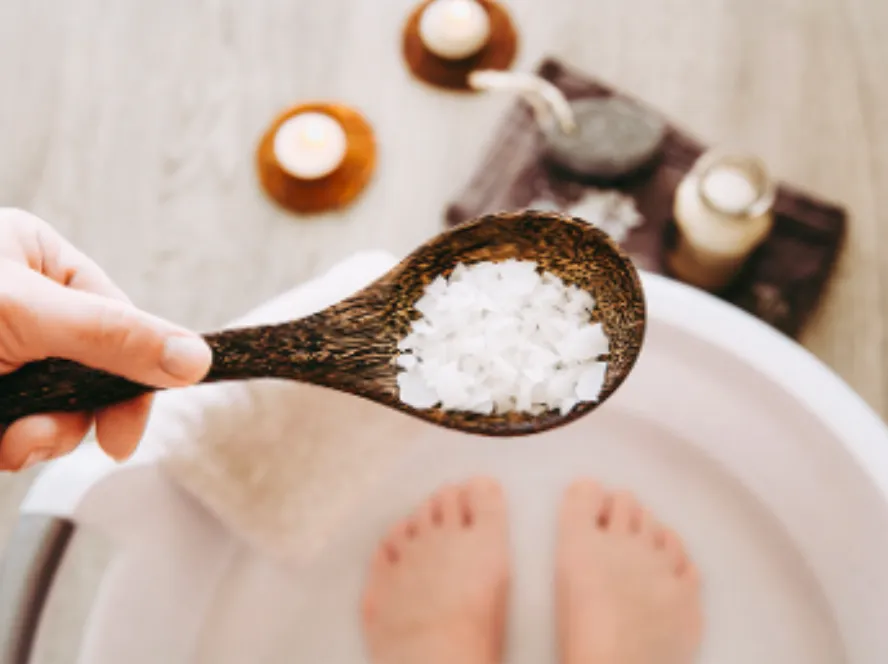
Epsom salt has a high magnesium content, which helps muscles recover.
-
Magnesium can be absorbed through the skin, which is why Epsom salt is used in hot baths.
-
How to use:
- Add 1–2 cups of salt to warm water.
- Wait until it dissolves.
- Stay in the bath for about 15 minutes.
- For a foot bath, add 1/2 cup of salt to a basin of warm water.
-
Chemistry corner:
- Epsom salt is magnesium sulfate with the formula MgSO4.
- It appears as a powder or white crystals.
- It is a component of mineral and sea water.
- Magnesium sulfate is highly hygroscopic, so it retains moisture easily.
2) Magnesium oil
- The magnesium in magnesium oil works similarly to Epsom salt.
- You can find it in pharmacies and cosmetics stores.
- How to use:
- Apply the oil directly to the skin about 20 minutes before showering.
- A light massage after application works best.
- Fun fact: despite the name, it is not actually an oil. It only feels oily because magnesium chloride flakes behave like oil when mixed with water.
3) Herbal massage oil
- A popular recovery option is a ready-made massage oil, available in drugstores or natural cosmetics shops.
- They often contain camphor or menthol, which improve blood flow, speed up inflammation recovery, and act as mild local anesthetics.
- Before using oils, make sure you are not allergic to any ingredients.
- Massage your sore legs after application; there are plenty of videos for inspiration.
- Fun fact: camphor is obtained from camphor tree wood, but its essential oils can also be found in sage, carrot, rosemary, or basil. Menthol comes from peppermint oil.
- Tip: regular kitchen olive oil also works well for massage.
4) Foam roller
- Another recovery option is a foam roller – a special massage cylinder with textured ridges.
- They come in many sizes, patterns, and firmness levels.
- You can buy one in sports stores and sometimes larger supermarkets.
- Rolling supports fascia release and lymph flow, speeding up recovery.
- If you need exercise ideas, ask a coach or physio, or look up tutorials online.
5) Recovery run
- A more active but still easy recovery option after heavier load is a recovery run.
- It is a short run at a very easy pace, ideally on a softer or more varied surface than asphalt.
- Detailed tips can be found at run-magazine.cz, obehani.cz, behej.com, or behani.cz.
- Light aerobic work improves blood flow, helping flush metabolites and deliver nutrients to muscles.
- The run is meant to be relaxed even at the expense of perfect technique, but keep your posture tall and avoid twisting your back.
- Tip: a good check that you are not running too fast is being able to talk comfortably with a partner.
6) Barefoot trails
- If a recovery run does not suit you, a barefoot walk is a great alternative.
- Besides a fun outdoor experience, walking barefoot on uneven ground lets your feet relax from tight shoes and gives them a natural massage. Balancing on uneven terrain also strengthens leg muscles and deep stabilizers.
- Choose textured surfaces like twigs, stones, sand, grass, sawdust, bark, or pine cones.
- Tip: you can build your own barefoot path at home from the materials above.
- Walk barefoot in a park, by water, in a forest, or among rocks.
- For variety, visit dedicated barefoot trails.
Recovery inspiration
Tools and routines that help tired legs unwind.