
Published February 1, 2026
St Brigid's Cross
A short guide to St Brigid's Cross, its link to Imbolc, and the mythic and Christian traditions surrounding Brigid.
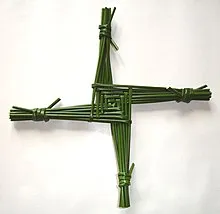
St Brigid’s Cross (Irish: Cros Bhríde or Crosóg Bhríde) is a traditional Irish symbol named after Saint Brigid of Kildare. Alongside the shamrock and the Celtic harp, it is one of Ireland’s well-known symbols.
What St Brigid’s Cross Is
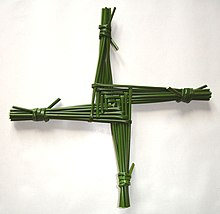
The cross is usually woven from straw or flexible reeds at the beginning of February, during Imbolc. In tradition, hanging the cross above the door is believed to bring protection and blessing to the home.
Who Brigid Was
The name Brigid comes from the Gaelic brígh, meaning strength, energy, or virtue. In Irish tradition, the name is linked to two strands: the mythic goddess Bríg and the Christian saint Brigid.
Mythic Bríg
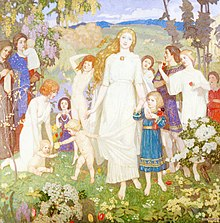
In Irish mythology, Bríg is connected with the Tuatha Dé Danann. She is often described as a daughter of the god Dagda, and her cult was strongly associated with the Kildare area in Leinster. Historical sources also mention sisters linked with craft traditions and healing.
Saint Brigid
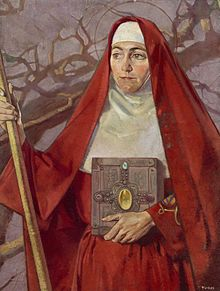
As Christianity spread, Brigid’s figure developed into Saint Brigid, one of Ireland’s three patron saints together with Saint Patrick and Saint Columba. Tradition places her life at the turn of the 5th and 6th centuries, with a major monastic center in Kildare.
A key written source about her life is Vita Sanctae Brigidae by the monk Cogitosus, compiled around the mid-7th century. In tradition, Brigid is associated with healing, learning, poetry, and crafts.
St Brigid’s Day and Imbolc
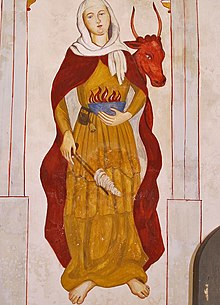
Saint Brigid’s Day (Lá Fhéile Bríde) falls on February 1 and is connected with Imbolc. The date sits roughly midway between the winter solstice and the spring equinox. Besides Ireland, the tradition is also observed in Scotland and on the Isle of Man.